Volatility in Trading: The Ultimate Guide to Risk and Opportunity
If you've spent any time around markets, you've heard about volatility. News anchors warn about it. Your trading platform flashes alerts for it. For most, it's a scary word synonymous with risk and loss. But that's only half the story. After a decade of trading through calm markets and absolute chaos, I've learned that understanding volatility's true meaning is the difference between being a passenger and being the driver. It's not just about how much prices swing; it's about why they swing, how to measure that swing, and, most importantly, how to position yourself before the swing happens. Let's strip away the jargon and look at what volatility really means for your trading decisions.
Your Quick Navigation Guide
What Volatility Really Means (Beyond the Textbook)
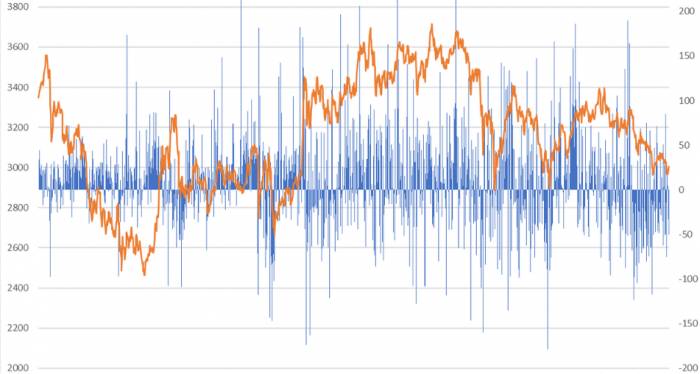
In technical terms, volatility refers to the statistical measure of the dispersion of returns for a given security or market index. In plain English, it's the degree of variation in an asset's price over time. High volatility means large price swings in a short period. Low volatility means prices are relatively stable.
But here's the catch most beginners miss: volatility is agnostic to direction. A stock that jumps 5% and then drops 5% is just as volatile as one that drops 5% and then jumps 5%. The market doesn't care about your bullish or bearish bias when it reports volatility; it only cares about movement.
The source of volatility matters more than the number itself. Is it driven by an earnings report (a scheduled, knowable event) or a sudden geopolitical crisis (an unpredictable shock)? The first you can prepare for; the second you can only react to. This distinction is crucial for strategy.
How is Volatility Measured? The Tools Traders Actually Use
You can't manage what you can't measure. Traders use a few key metrics to get a handle on volatility. Relying on just one is a common error.
Historical Volatility (HV)
This looks backward. It calculates how much an asset's price has deviated from its average price over a specific past period (like 20 or 30 days). It's straightforward but has a major flaw: it's a lagging indicator. By the time HV spikes, the big move has often already happened. It's like looking at yesterday's weather report to decide if you need an umbrella today.
Implied Volatility (IV)
This is the market's forecast. Derived from the prices of options, IV reflects how much the market expects an asset to move in the future. It's forward-looking. When traders are fearful or uncertain about an upcoming event (like a Fed meeting), they bid up option prices, which raises IV. The CBOE Volatility Index (VIX), often called the "fear gauge," is the most famous measure of implied volatility for the S&P 500.
Here’s a practical comparison:
| Metric | What It Measures | Key Insight for Traders | Major Limitation |
|---|---|---|---|
| Historical Volatility (HV) | Past price movements (how much it actually moved). | Shows the recent "temperature" of the asset. Useful for setting stop-losses based on recent ranges. | Lagging indicator. Doesn't predict future moves. |
| Implied Volatility (IV) | Expected future price movements (how much options traders think it will move). | A sentiment gauge. High IV often precedes large moves (up or down). Critical for pricing options. | Can be wrong. Markets can overestimate or underestimate future moves. |
| VIX Index | Market's 30-day implied volatility expectation for the S&P 500. | Broad market fear/ complacency indicator. Often inversely correlated with the S&P 500. | Measures expectation, not reality. Can remain elevated or depressed for extended periods. |
One subtle point: IV is often higher than HV. Why? Because options traders demand a premium for uncertainty—they get paid to take risk. This difference, called the "volatility risk premium," is a cornerstone of many professional strategies.
Trading High vs. Low Volatility: A Tactical Shift
Your entire approach should change based on the volatility environment. Sticking to one playbook is a recipe for frustration.
In Low Volatility Markets: Trends are often smoother but can be slow. Ranges are tight. The common mistake here is forcing trades out of boredom, leading to overtrading. This is the environment for trend-following strategies, selling options to collect premium (since IV is often low), or focusing on longer timeframes. Patience is the key skill. I've seen more accounts bleed out from a thousand small cuts in low-volatility chop than from single big losses in a crash.
In High Volatility Markets: Price moves are fast and large. Liquidity can dry up, causing wider bid-ask spreads. The emotional mistake is panic—either fleeing all positions or revenge trading. This is the environment for volatility breakout strategies, buying options for defined risk (though they're expensive), or simply widening your stop-losses to avoid being whipsawed. Position sizing becomes exponentially more important. Cutting your normal position size by 30-50% in high volatility isn't being timid; it's being smart.
Practical Strategies for Different Volatility Regimes
Let's get specific. Here are ways to apply this knowledge, moving from simple to more advanced.
For Stock & Forex Traders
Use Average True Range (ATR) for Stops and Targets: The ATR indicator measures market volatility over a set period. Instead of using a fixed dollar amount for your stop-loss, set it at 1.5x the current ATR below your entry. In a volatile market, the ATR is large, giving the trade room to breathe. In a calm market, the stop is tighter, protecting profits. It's a dynamic tool that adjusts to current conditions automatically.
Spot Volatility Squeezes: Sometimes, historical volatility collapses to multi-month lows while the price trades in a very tight range (a "squeeze"). This often precedes a massive volatility expansion and a strong directional move. Tools like the Bollinger Bands® can visually show this when the bands contract sharply. It's not a timing signal, but a warning to get ready and not be caught leaning the wrong way.
For Options Traders
Sell Premium in High IV, Buy in Low IV: This is the basic mantra. When IV is high (like after a big sell-off), option prices are inflated. Selling options (e.g., cash-secured puts, covered calls, credit spreads) allows you to collect that expensive premium with the expectation that volatility will revert to its mean and fall. When IV is extremely low, buying options (like long-dated calls or puts) can be cheaper, positioning for a future move.
Beware of "IV Crush": This is a painful lesson for new options buyers. You buy a call option before a company's earnings report because IV is high, expecting a big move up. The company crushes earnings and the stock jumps 8%... but your call option barely moves or even loses value. Why? The implied volatility "crushed" from its pre-earnings highs post-announcement, eroding the option's time value. The move was right, but the volatility dynamic was wrong.
Common Volatility Trading Mistakes to Avoid
I've made some of these myself. Learn from them.
Mistake 1: Assuming High Volatility Means a Crash. Volatility is about movement, not direction. The 2020-2021 bull run had periods of extremely high volatility—to the upside. Fear of volatility can cause you to miss major rallies.
Mistake 2: Using Fixed Position Sizes. Trading the same dollar amount per trade in a calm market and a crisis market is mathematically reckless. Your risk per trade should be a percentage of your account, and that percentage should be adjusted downward when volatility spikes.
Mistake 3: Chasing "Cheap" Options in Low Volatility. They're cheap for a reason. The market expects little to happen. A long period of low volatility often begets more low volatility. You can sit on a long option for months watching its value decay with time (theta) before any move happens.
Mistake 4: Ignoring Sector Volatility. Market-wide VIX is useful, but individual sectors have their own volatility profiles. Tech stocks are inherently more volatile than utilities. Use ETF options like those on the Technology Select Sector SPDR Fund (XLK) or the CBOE Nasdaq Volatility Index (VXN) to gauge sector-specific fear.
Your Volatility Questions Answered
Ultimately, volatility isn't your enemy. Ignorance of volatility is. By understanding its meaning, measuring it correctly, and adapting your tactics to its ebbs and flows, you transform it from a source of fear into a quantifiable variable in your trading equation. Start by checking the ATR on your next chart or the IV percentile on an option chain. That simple act is the first step in trading with the market's rhythm, not against it.
Related Articles



Comments